
Step one of the cycle
Nine traditions, from the Nile to the Pacific Northwest.
We move one tradition at a time. Study the one that's open, and the next one unlocks — with the Cast bank ready to put Nubian, West African, Afro-Latina, and Afro-Caribbean models in the picture.
 01Open now
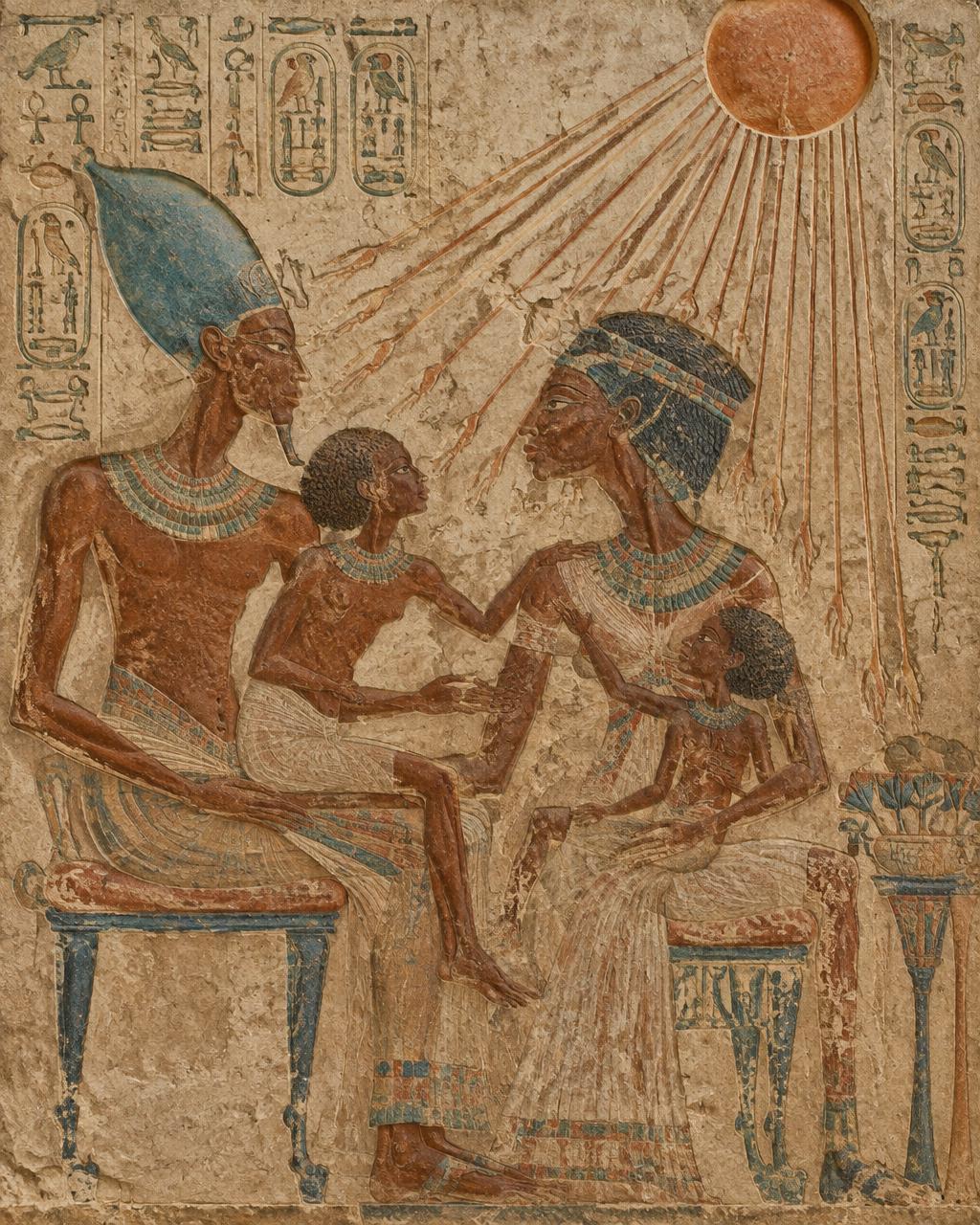
Amarna Period Egyptian Relief
Akhetaten (Amarna), Egypt · c. 1350 BCE
For about seventeen years, one pharaoh turned Egyptian art upside down. He moved the capital to a new city in the desert and put a single god at the centre of everything: the Aten, the sun disk, its rays ending in little hands that reach down to bless the royal family. The artists followed. Bodies grew long and soft, heads tilted, and for the first time the king was shown at home — kissing his daughters, sitting with his queen, relaxed under the sun. It is the most intimate moment in three thousand years of Egyptian art.
Study this movement →Locked
Finish the tradition before this one and it opens up.
Locked
Finish the tradition before this one and it opens up.
Locked
Finish the tradition before this one and it opens up.
Locked
Finish the tradition before this one and it opens up.
Locked
Finish the tradition before this one and it opens up.
Locked
Finish the tradition before this one and it opens up.
Locked
Finish the tradition before this one and it opens up.
Locked
Finish the tradition before this one and it opens up.