
01 · Akhetaten (Amarna), Egypt · c. 1350 BCE
Amarna Period Egyptian Relief
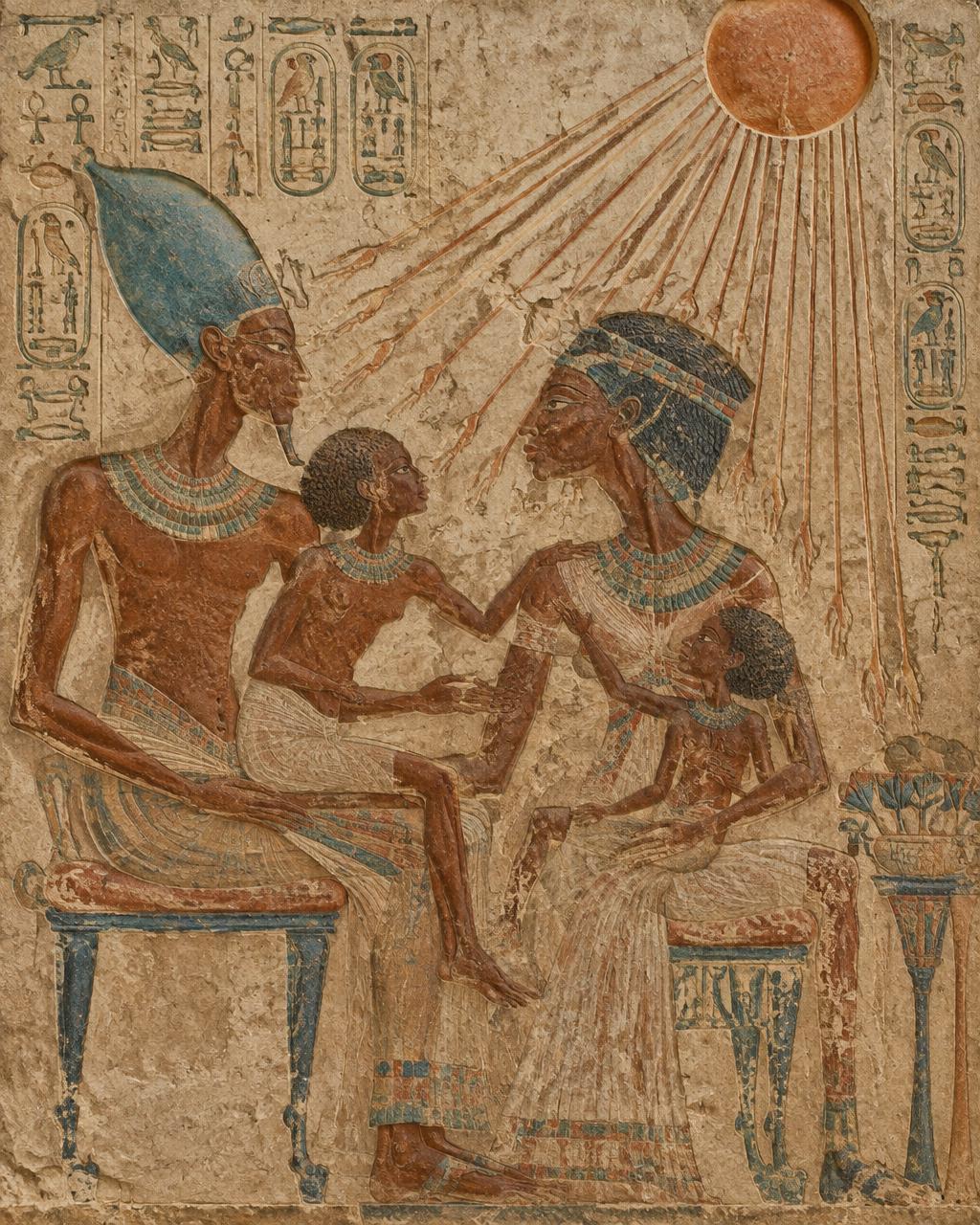
For about seventeen years, one pharaoh turned Egyptian art upside down. He moved the capital to a new city in the desert and put a single god at the centre of everything: the Aten, the sun disk, its rays ending in little hands that reach down to bless the royal family. The artists followed. Bodies grew long and soft, heads tilted, and for the first time the king was shown at home — kissing his daughters, sitting with his queen, relaxed under the sun. It is the most intimate moment in three thousand years of Egyptian art.
Thutmose and the Amarna workshops
active c. 1350 BCE
Thutmose was the royal sculptor at Amarna; his workshop was found with plaster studies and unfinished heads still inside. The relief carvers around him worked in sunk relief — cutting the figure into the stone so its edges catch strong desert light — and painted over it in ochre, turquoise, and red. They pushed the proportions on purpose: long necks, long fingers, heavy hips, faces in profile with a gentle downward gaze.
Look for
- elongated, softly curved profile figures
- sun disk with rays ending in hands
- intimate family and domestic moments
- sunk relief catching the light
- hieroglyph cartouche panels
You've walked the cycle for 01.
Now take that language into the lab: pick your layers, roll the dials, and pull prompts in this style — always carrying Diaspora imagery.